Inside the J-Rong factory in Foshan, China
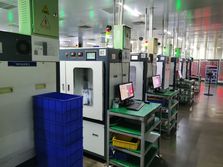
600 m² of production space, 3 automated assembly lines, 20 machines and 50 people — manufacturing lithium-ion phone batteries since 2010. Everything on this page was photographed on our own floor.
Fifteen years of doing one thing: phone batteries
Foshan Jurong New Energy Technology Co., Ltd. was established in 2010 at Beihai Science Park in Dali Town, Nanhai District, Foshan — the industrial belt that supplies much of China's consumer electronics aftermarket.
We started on domestic orders and still serve the Chinese market, which is why our quality bar is set by the most demanding repair market in the world. Since 2020 we have exported directly, and we now serve distributors and brand owners in Russia, India, Saudi Arabia, the United Arab Emirates, Nigeria and Vietnam.
We are vertically integrated from raw material procurement through to final shipment. That means one company is responsible for the cells that go in, the testing in the middle and the carton that arrives — not three suppliers blaming each other.

“We are a factory, not a middleman. Send me your model list and I will personally make sure the price and the quality are right.”
Michael Hui
Founder & General Manager · Foshan Jurong New Energy Technology Co., Ltd.
Four gates before a battery reaches your carton
Quality is not a final inspection at this factory — it is four checks placed along the line. Any unit that fails is pulled, not repackaged.
- Incoming screening — cells measured for capacity, voltage and consistency before release to production.
- In-process monitoring — station-level logging across clipping, labelling and printing.
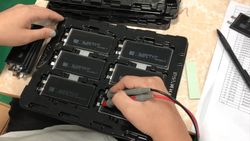
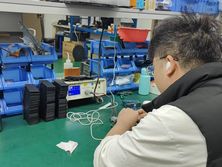
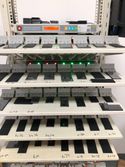
- Two testing stations — first test after assembly, second test immediately before packing.
- 100% final inspection — visual and functional check on every single unit, plus batch capacity reports.
| 1. Incoming material screening | Every batch of cells and components is checked for capacity, voltage and consistency when it arrives, before it is released to the line. |
|---|---|
| 2. In-process monitoring | Operators log output at each station — clipping, labelling and printing — so a deviation is caught at the station, not at the end. |
| 3. First and second testing | Two testing stations on the line: a first test after assembly and a second test immediately before packing. |
| 4. Pre-shipment inspection | Finished cartons are sampled for capacity, impedance and appearance. We keep material traceability records for every batch. |
Company facts, as audited
The figures below come from our SGS-verified supplier profile. They are the numbers we are prepared to be held to.
| Established | 2010 (export experience since 2020) |
|---|---|
| Facility size | 600 m² |
| Workforce | 50 employees |
| Production lines | 3 automated assembly lines |
| Machines | 20 units |
| Annual capacity | 600,000 pieces / year |
| Quality inspectors | 2 dedicated QA/QC staff on the line |
| Finished goods inspection | 100% — visual and function inspection |
| Raw material traceability | Yes — records kept |
| R&D / ODM | In-house R&D, ODM service available |
| Own brand | Yes — J-Rong |
| Nearest ports | Shenzhen Port, Guangzhou Port |
| SGS audit reference | QIP-ASI251198 |
| Supplier rating | 5.0 / 5 · average response under 1 hour |
| Incoterms | FOB, CIF, CFR, EXW |
|---|---|
| Payment terms | T/T, L/C, D/P, PayPal, Western Union, small-amount payment |
| Lead time | Within 15 working days (peak and off-peak season) |
| Minimum order | 200 pieces (50–100 pieces on selected lines) |
| Sample lead time | 3–7 days by DHL / FedEx / UPS / TNT / EMS |
| Courier partners | DHL, FedEx, UPS, TNT, EMS, HK EMS, HK Post |
| Bulk shipping | Sea freight, air freight or express — your choice of Incoterm |
| HS code | 8507600090 |
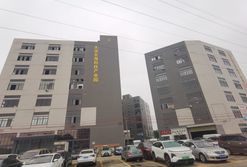
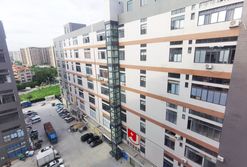
Facility
Our plant sits inside Beihai Science Park in Dali Town, Nanhai District — Foshan's manufacturing belt, one hour from Guangzhou.
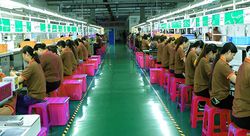
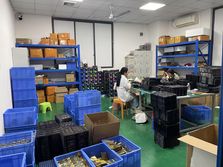
Production
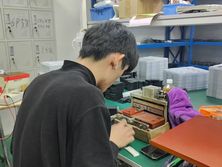
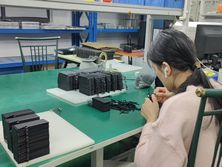
Three automated assembly lines and twenty machines handle electrode processing, clipping, labelling and printing.
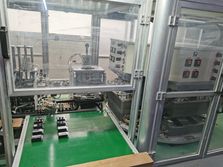
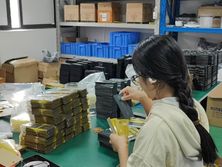
Quality Control
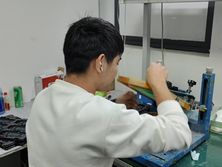
Two dedicated testing stations run on the line. Every unit gets a visual and functional check before it is boxed.
Warehouse
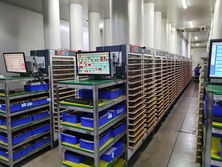
Incoming cells and components are screened and stored in a controlled material warehouse with traceability records.
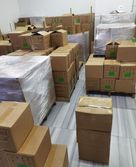
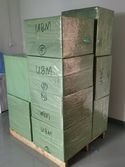
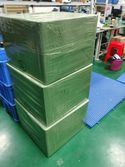
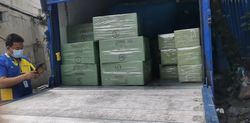
Packing & Logistics
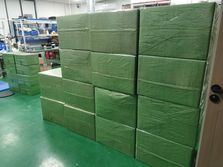
Packing runs in three stations, and export cartons are prepared to dangerous-goods packing requirements.
Export markets
Serving distributors, wholesalers and brand owners worldwide.
Send us your phone model list — get a quotation in 10 minutes
Tell us the models and the quantity. We will come back with FOB pricing, lead time and the shipping weight for your exact order. Free samples for qualified buyers.
Factory & compliance questions
What buyers ask before they book a factory visit or place a first order.
Are you a factory or a trading company?
We are the factory. Foshan Jurong New Energy Technology Co., Ltd. has manufactured lithium-ion phone batteries at Beihai Science Park, Dali Town, Nanhai District, Foshan since 2010. Our facility runs 3 automated assembly lines and 20 machines, and our capacity is verified at 600,000 pieces per year.
Which certifications do your batteries carry?
Our batteries are supplied with CE, FCC, CCC, MSDS and GB18287-2000 documentation, and our export packing complies with dangerous-goods regulations. Our business licence and production capacity are verified by SGS under audit reference QIP-ASI251198. Certificate copies are available on request with your quotation.
What are your payment terms and lead time?
We accept T/T, L/C, D/P, Western Union, PayPal and small-amount payment. Incoterms: FOB, CIF, CFR and EXW. Standard production lead time is within 15 working days for both peak and off-peak season, and we ship from Shenzhen or Guangzhou port.
How do you control quality?
Every unit is inspected — 100% visual and function inspection before packing. Incoming cells are screened on arrival, production is monitored in line, and finished goods pass a pre-shipment capacity and impedance test. We keep material traceability records and run two dedicated testing stations on the production line.